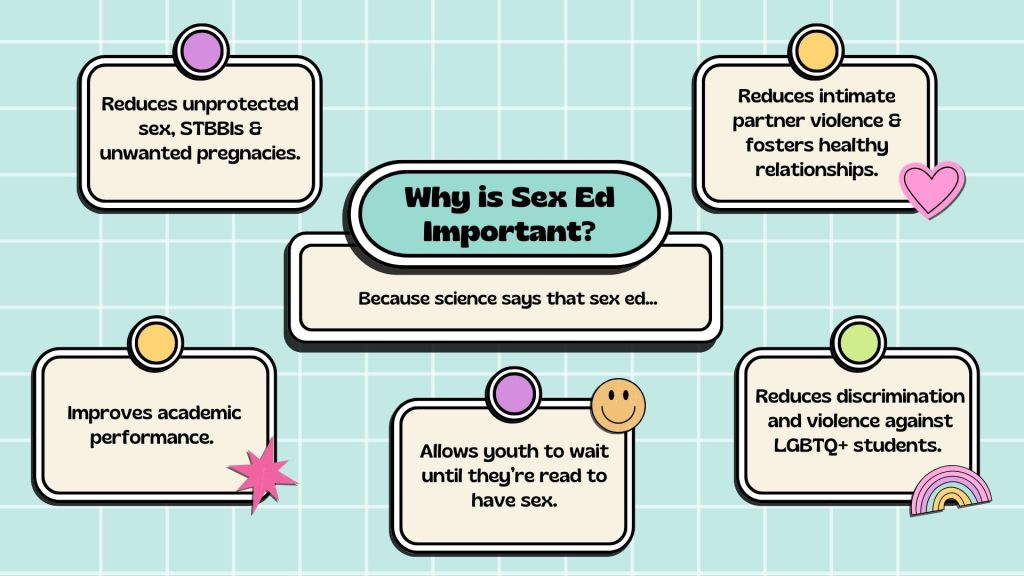
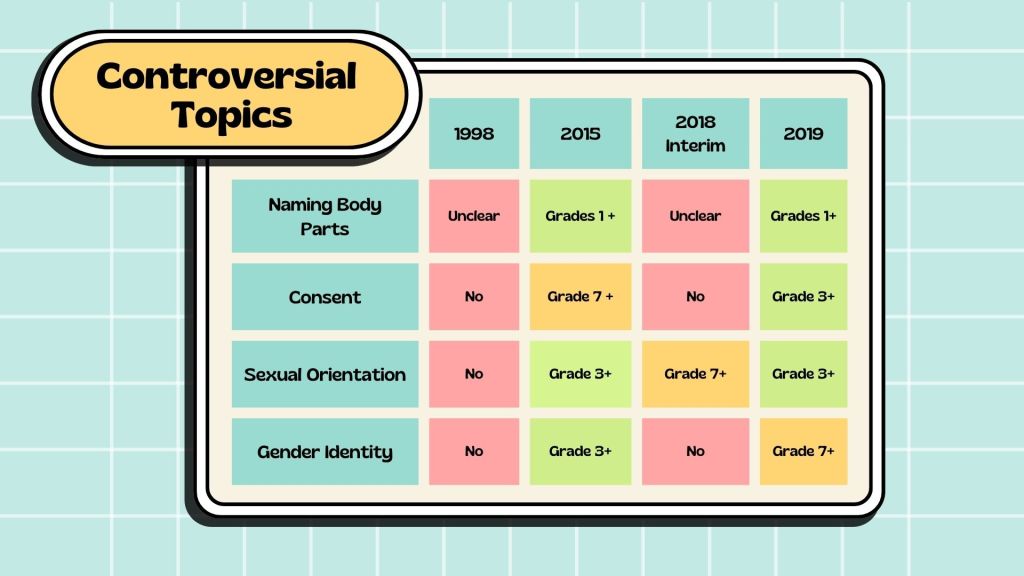
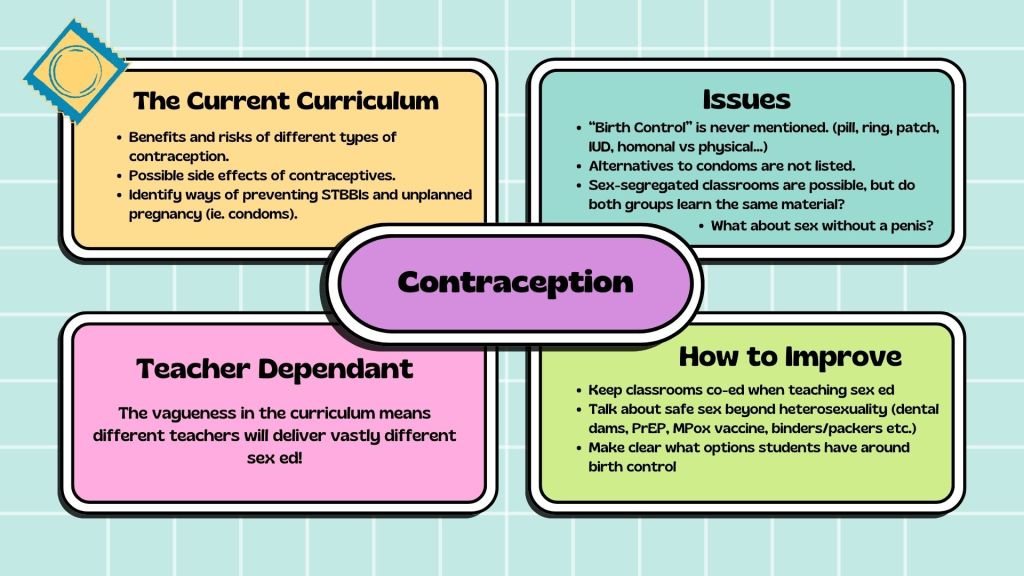
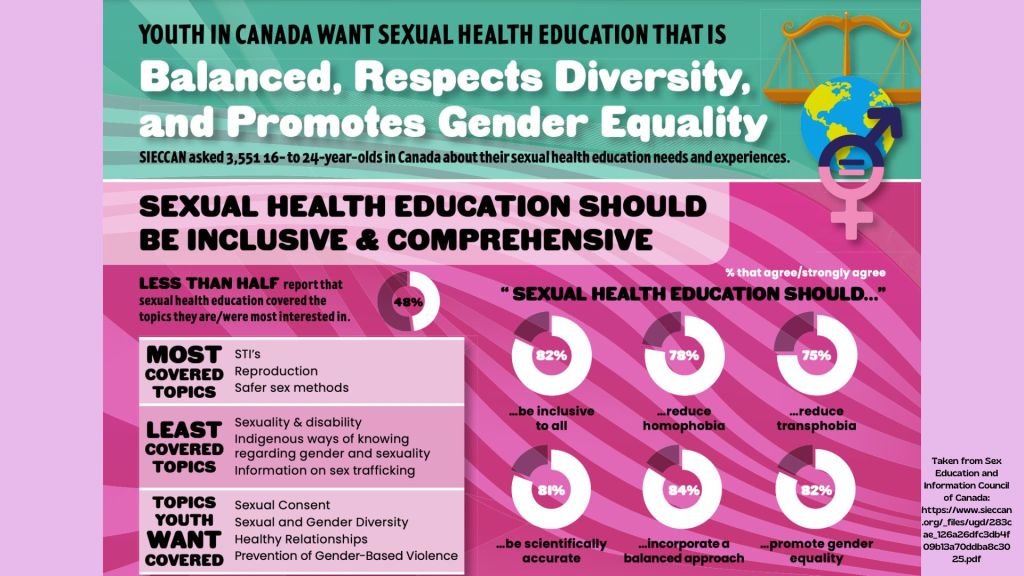
As two teacher candidates who are invested in feminist and queer pedagogies, we take a special interest in sexual health education because it has a disproportionate impact on women and queer people. That is, a comprehensive sexual health education curriculum can lead to a lower risk of unwanted pregnancies, can challenge the normalization of sexual violence, and can help create a safe environment for those whose gender or sexual orientation differs from the cisgender-heterosexual norm. In Ontario, controversy has been following the sexual health curriculum for decades, with some parents arguing that sex ed should remain outside of schools. This framing has led to some curriculum changes (implemented in 2015) being rescinded in 2018, especially around gender identity, sexual orientation, and consent. Only one year later, the curriculum was reinstated, with some small alterations. It is our position that some changes are still required, as parents can still opt-out of the curriculum entirely and much leeway is given to educators where content should be more specific. For example, we trace the term “contraception” in the curriculum to show that more information is necessary to include for students so that queer students can also be empowered by this information and so that those that might be at risk of pregnancy know their options.

Where is Sex Education in the Ontario Curriculum?
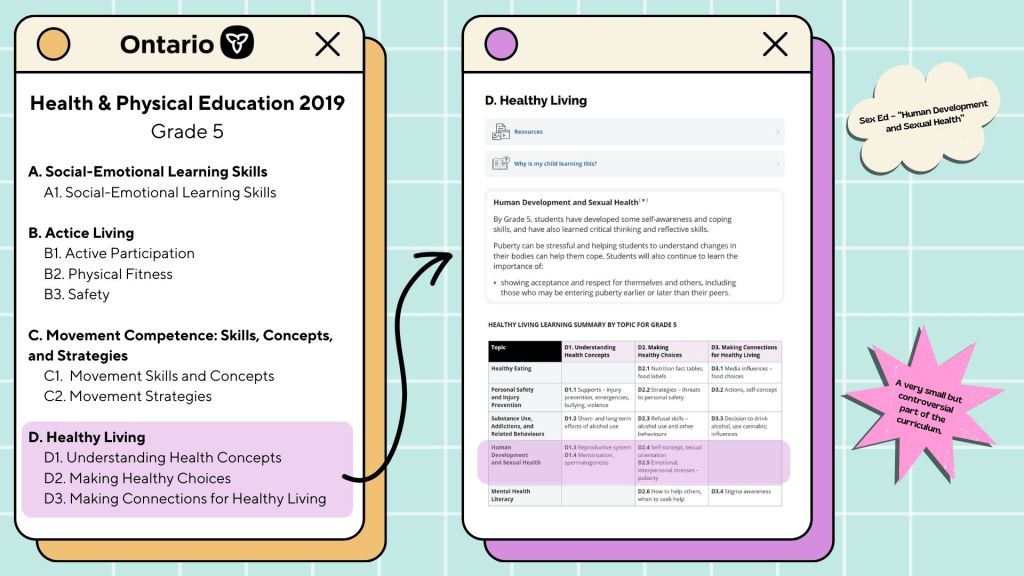
Sex education in Ontario is part of the Health and Physical Education curriculum. The term “sex ed” itself doesn’t appear in the curriculum; instead, it’s called “Human Development and Sexual Health” and falls under Strand D of Health and Physical Education, in “Healthy Living”. While Human Development and Sexual Health comprises a very small section of the curriculum, it is the subject of intense media scrutiny and public backlash. Sexual Health continues into secondary school, but for the purposes of our project, we focussed on the curriculum from K-Grade 8.
Towards our Teaching Philosophies and Beyond
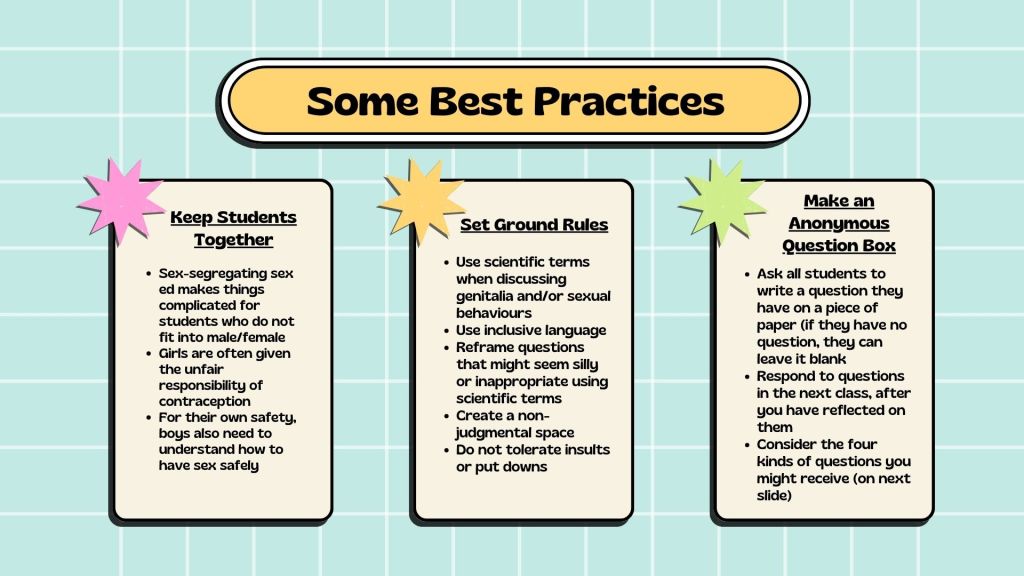
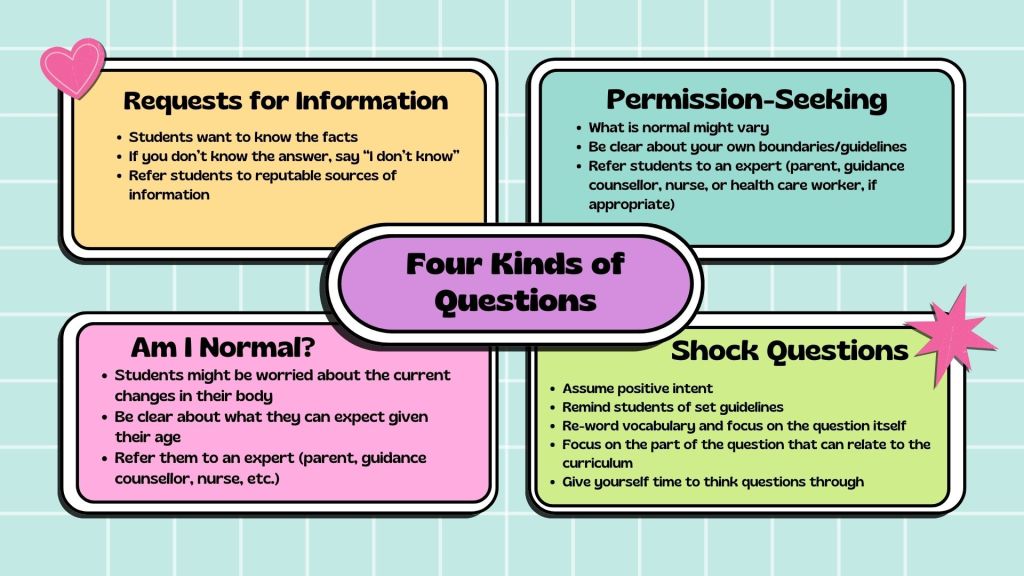
Katelyn has a background in biology, so is specifically interested in how human bodies function, including sexual behaviours. Meg has a background in feminist and gender studies, so is specifically interested in the social impacts of gender, including gendered behaviours like sex. Together, we aim to be the kind of teachers that give space for our students to ask difficult questions and be comfortable with being uncomfortable. When it comes to controversial topics like sex, it is important to normalize having desires–or having a lack of desire–and make space for students to disagree with one another. Exploring this topic has allowed us to reflect on how to best answer questions that might seem inappropriate, as students might want to push our buttons, or might be really uncomfortable asking the questions they want answers to. As well, topics like consent are useful for more than just physical touch–as many topics might be “touchy” in the classroom and checking in on our students’ boundaries will always be a useful strategy.
 Katelyn Day