
This activity was created for the Math & Science course during the first year of my Bachelor of Education. Each teacher candidate was responsible for running one station of a Math & Science Circus.
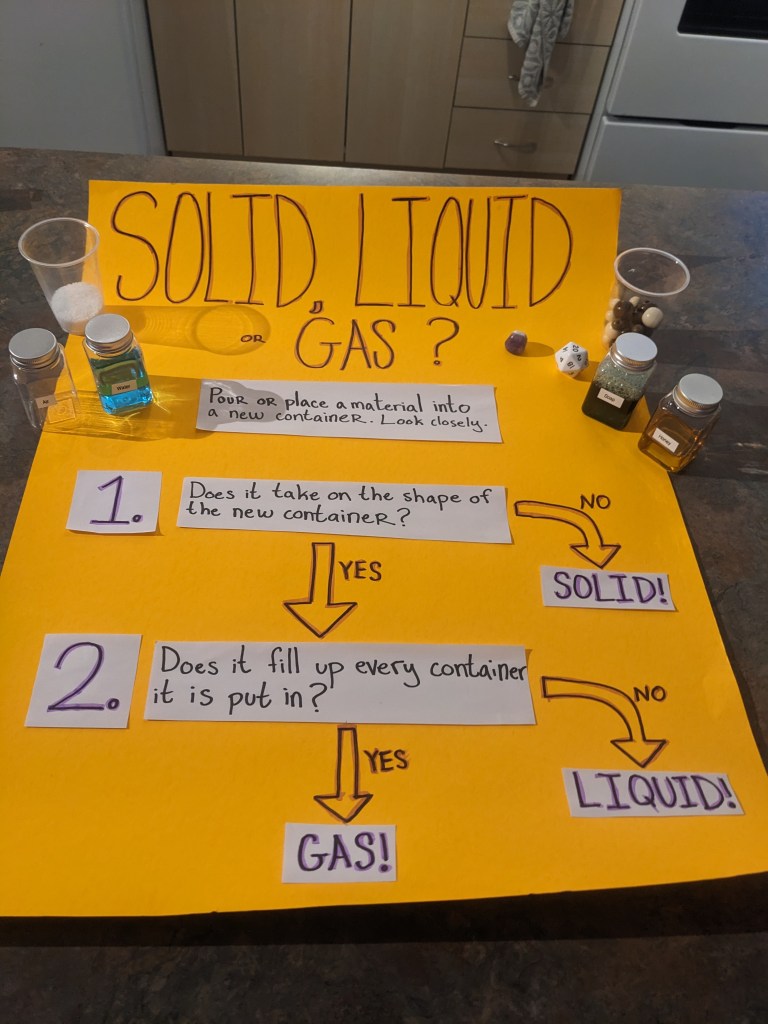
Science Activity Plan
Title: Solid, Liquid or Gas?
Goal: Be able to classify various materials as either a solid, liquid or gas and explain why.
Junior Science Curriculum Link:
Grade 5 | Science & Technology | Strand C: Matter & Energy
C2.2 identify the states of matter, and describe characteristics and properties of solids, liquids, and gases
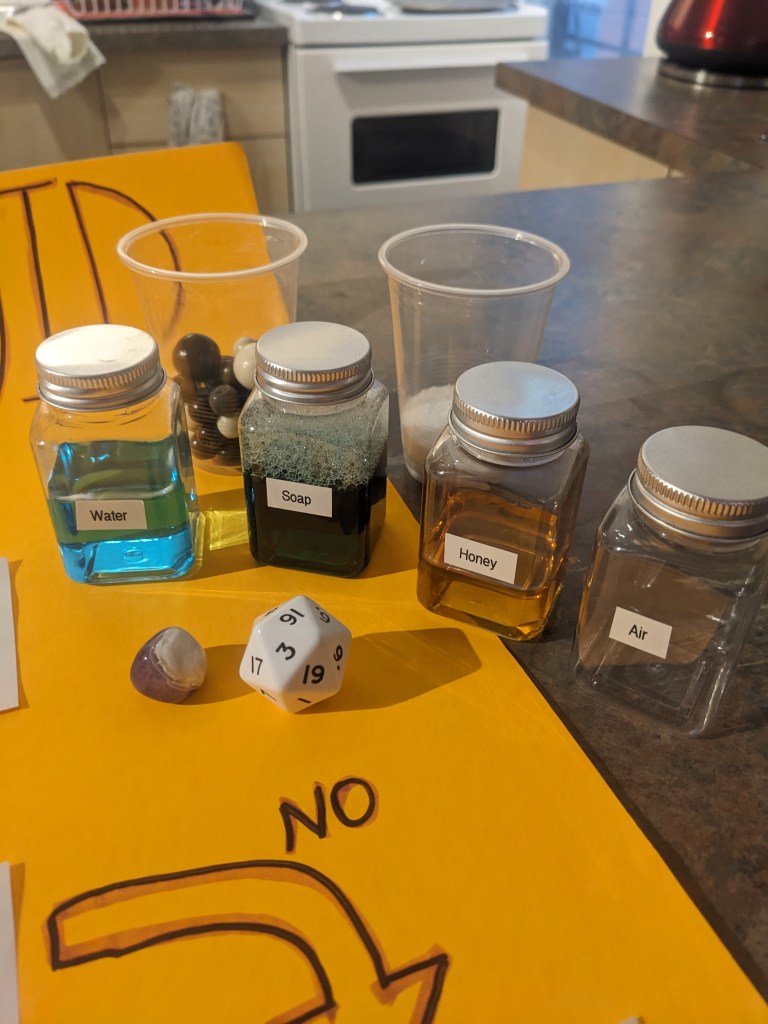
Materials:
- Flow chart: Solid, Liquid or Gas
- Rock
- Toy
- Water
- Soap
- Honey
- Beads
- Salt
- Various shaped containers (preferably clear)
Pre-Activity Lesson:
What is matter?
Matter is anything that has mass and takes up space by having a volume.
- Is this rock matter? Yes.
- Is this water matter? Yes.
- Is the air matter? Yes, although we feel air as light it still has mass.
- Is a sound matter? No, it doesn’t have particles with mass and volume.
- Is light matter? No, it doesn’t have particles with mass and volume.
- Is a light bulb matter? Yes.
Encourage hard questions and student lead examples.

Simple Definitions:
- What is a solid? Matter you can feel and hold (rock, chair, book…)
- What is a liquid? Matter you can feel but is hard to hold (water, juice, milk…)
- What is a gas? Matter that is hard to feel and hard to hold (air, helium, steam…)
Encourage hard questions and student lead examples. For example Can you hold honey? Can you feel steam? Our simple definitions make these questions hard to answer we need more complex definitions.
Final Definitions:
There are two experiments you can do (or questions you can ask) to figure out if matter is a solid, liquid or gas:
| Solid | Liquid | Gas | |
|---|---|---|---|
| Does it take on the shape of any container it is put in? | No | Yes | Yes |
| Does it fills any container it is put in? | No | No | Yes |
Activity Answers
- Ice:
- Does ice take on the shape of any container it is put in? No
- Does it fill any container it is put in? No
- Conclusion = Solid
- Honey:
- Does honey take on the shape of any container it is put in? Yes
- Does it fill any container it is put in? No, you can see the line when the honey stops.
- Conclusion = Liquid
- Steam:
- Does steam take on the shape of any container it is put in? Yes
- Does it fill any container it is put in? Yes, the whole glass will fog up.
- Conclusion = Gas
Harder Examples
- Beads:
- Do beads take on the shape of any container they are put in? Kind of…? But there are spaces between the beads.
- Do they fill any container they are put in? No (Conclusion = not a gas)
- Are the beads all one item or a group of items? Group
- Does one bead take on the shape of any container it is put in? No.
- Conclusion = Multiple solid objects.
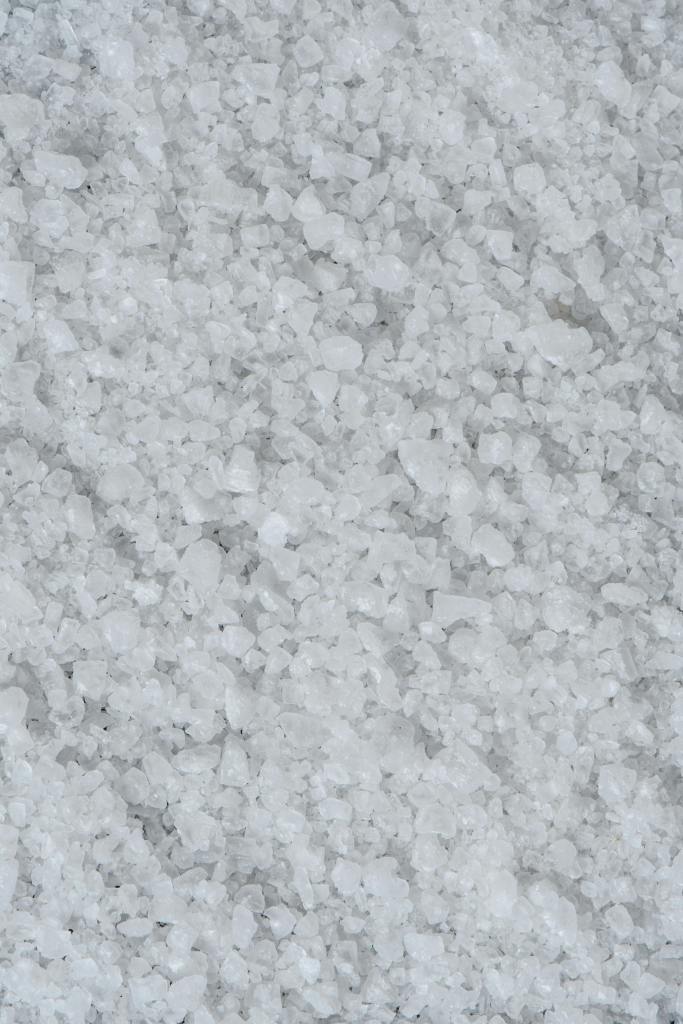
- Salt:
- Does salt take on the shape of any container it is put in? Yes.
- Does it fill any container it is put in? No. (Conclusion = not a gas)
- Conclusion = Liquid … Does that seem right? Is salt a liquid? What are we missing?
- Does one grain of salt take on the shape of any container it is put in? No.
- Conclusion = Multiple solid objects. Just like with the beads salt can’t really take on the shape of a container because their are lots of tiny gaps between the salt grains. It’s just hard to see with our eyes.
 Katelyn Day